The idea of Artificial Intelligence is almost as old as modern sci-fi as a genre. Humans are a social species. Not only do we thrive on having a group with us, we required a group of some kind. A pack, if you will.
Our young can’t survive without care. It takes years, some would argue decades, for humans to develop to a stage where they can be mostly independent. And – time and again – we’ve seen that humans can never be fully isolated and thrive. Humans need other humans even for the most basic survival of our species (head over to the Romance section of any bookstore if you need details).
Because of this, humans will anthropomorphize anything and everything. We see personalities in rocks and trees. We’ll name vacuums and weapons. We’re a species that turned rocks into pets. We want to connect with the world around us in the same way we connect with our species. So AI isn’t hard to imagine.
We’ve finally created a computer that can communicate with us easily. In our own languages. Is it any wonder that humans are eager to welcome the idea of artificial intelligence? Of computers with personalities and thoughts like are own?
Of course not!
We wouldn’t invest all this time, energy, and money into studying something if we thought it would never prove useful. Humans are, at their very core, explorers. We ask questions. We search for answers. We are always looking for a way to communicate better with the world around us.
Which is why the current AI is so heartbreaking in so many ways.
Instead of finding a beautiful new way to communicate, we’ve found a new form of theft, abuse, and lies.
Most of us first played with the early AI models thinking it was the AI from our sci-fi shows. It was a computer that could think for itself and talk to us. It could give us advice, give us answers, and be our friend the same way pet rocks were our friends.
The truth – that AI is created mostly off of stolen art and work, and tends to regurgitate lies a large part of the time – is heartbreaking.
No one wants to see artists erased from humanity. Art is one the first forms of communication. It is sometimes the easiest form of communication between two different groups of humans. Art is unifying and beautiful, allowing people to share their thoughts and feelings across thousands of miles and centuries.
Yet we have the AI presented to the public and it is a program fed on stolen art. Created not to communicate, but to steal your right to your own thoughts. What a betrayal of the human right to creativity!
The good news is that not all AI is an injust betrayal of what makes humans human. It is a program that recognizes patterns, and there are places within science that pattern recognition is sorely needed. In 2025 scientists the Technical University of Denmark reported using AI to target cancer cells in 4-6 weeks instead of the much longer time it took scientists to find this data without AI help. That’s amazing! That’s going to save lives!
There are other places in many scientific fields where the current AI will undoubtedly help save time and find solutions much faster than we’re currently able to.
What AI can’t do – and what it should never be asked to do – is replace you.
AI is not ever going to be a substitute for creative humans. AI will never be able to make art, write music, plot books, or replace how you think as an individual. Because you are made up of a thousand, million, billion unique moments. Of emotions, thoughts, memories, and experiences that no one else experienced quite the way you did.
One day, I hope we have real AI like the kind I write about in my books.
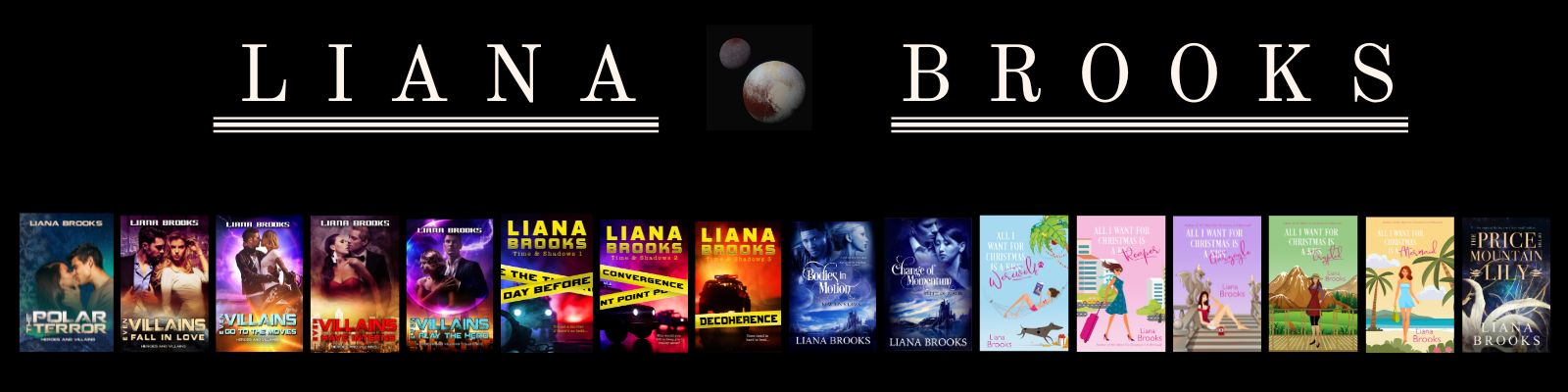
I’m looking forward to seeing artificial intelligence like I write about in BODIES IN MOTION and CHANGE OF MOMENTUM. I’m excited to see how an artificial intelligence raised to have its own personality views the world. How it communicates. How it embraces, or shuns, humanity. That’s exciting!
But we’re not there yet. And I hope that we all understand that sacrificing our water supply while stealing from authors and artists you love is not going to create the AI of our sci-fi dreams. The AI we have right now has a place in the lab. It can do good things, but it’s not ready to be your best friend or write a book for you.
You are unique and amazing.
You’re going to do great things.
So let’s move towards a great future together.